Jesus Secures and Gives us Peace


30 April 2006: Third Sunday of Easter
Acts 3, 13-15, 1 John 2, 1-5, Luke 24, 35-48

If we have parents or siblings who are lawyers, we feel secured when we have legal problems. If we have relatives who are doctors, we feel safe when we are sick. We know we have someone to run to when we are unwell. If we have relatives who are policemen, we feel protected. For many Filipinos, a friend at the governor’s office is a source of tenability and pride: “may kakilala ako diyan.” We invite these experts and solidify our ties with them by making them godparents of our children. Sooner or later, we hope that in our need they will help us because --- kumpare ko yan! Kasangga ko yan! We feel aided, secured and at peace.

In the first letter of John in the second reading, he tells us that “we have, in the presence of the Father, Jesus Christ who is our intercessor.” John tells us we are secure with Jesus. And the Gospel tells us that we are at peace with Jesus. Jesus is our hope --- like the lawyers, doctors, the policemen, and the friend at the governor’s office who are close to us.

But our lives tell us differently from our belief. Though we believe that Jesus is our hope, our security and our peace, and yet we find ourselves insecure, hopeless and without the peace of mind we long for. Often we find our security in our possessions, our professions and our popularity. But though some of us may have them, we still do feel empty, anxious and unsure of ourselves.

There are other sources of security. If we are penniless and we find ourselves in a mall, we feel insecure. In UP, if we find ourselves in class with those who came from prestigious schools, we become apprehensive. If we find ourselves at a gathering of famous people, we often find ourselves dropping names in order to be at par with them. Our low self-esteem can leave us insecure.

I guess we feel this insecurity because we doubt the truth that Jesus is a tangible and real source of security. The resurrection was not a hallucination or a dream concocted by the disciples as many of the present books claim. This is why Jesus showed Thomas his hands, his feet, and his wounds. Luke’s Gospel tells us that He asked for food and he ate. We’ve got to believe that Jesus is worth clinging on to. Pwedeng makapitan sa kagipitan.

A friend of mine fell in love with a girl who comes from a famous and wealthy family. He wanted to woo her, but couldn’t because of the gnawing question about his worth. So he dismissed the thought, and settled for friendship. After a few years, he learned that someone rich and famous have proposed to her. He decided to put a stop to his dreams. Two weeks ago, they were able to talk. The girl is planning to get married, so he told her the truth. She said that it was too late: if he proposed to her the first year they became friends, she would have said yes.

I guess my friend forgot to believe in himself and that his dignity lies in Jesus at his side. Jesus is our intercessor. Then we are secured. We should be at peace.

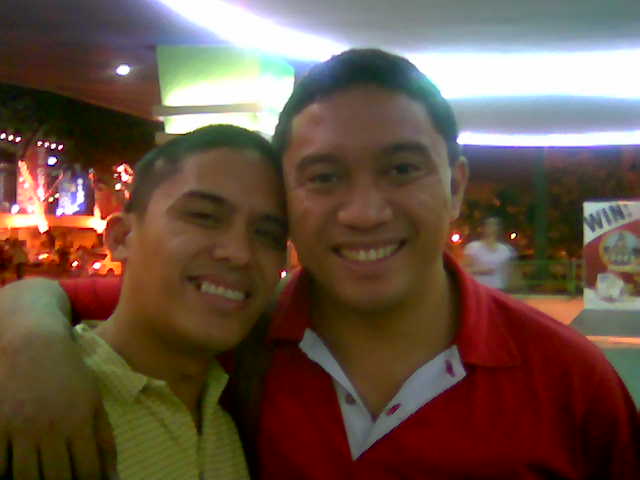
*My two brothers: Jesse (youngest, in yellow shirt) and Jayson (fourth, in red).

Back Issues: Late reflections


Note: I have decided to post all of these reflections of the past week. Just in case they too might help. These are Simbahay Articles which I did for the Paulines' publications.

April 20, Thursday

Luke 24, 35-48

"Tingnan niyo ang aking mga kamay at mga paa, ako nga siya."

PAGSASADIWA

May paraan ng pagtuturo si Hesus sa kanyang mga alagad. Nagpakita siya kay Tomas, at nagpakilala sa pamamagitan ng pagpapakita ng kanyang mga sugat: “Tingnan ninyo ang aking mga kamay at mga paa, ako nga siya. Hipuin ninyo ako at unawain ninyo na walang laman at mga buto ang isang espiritu.” Pinahipo niya ang kanyang mga sugat upang manalig si Tomas, at pinakita niya ang kanyang mga sugat upang makilala siya.

Isang katotohanan na ang bumubuo at nagpapanday ng ating sarili ay ang ating mga sugat. May mga taong matigas ang mga puso, dahil ayaw na nilang masaktan muli. May mga tao namang patuloy na nagmamahal at nagpapatawad, pagkatapos iwanan. Ngunit sinasabi ni Hesus na huwag matakot magpatuloy magmahal dahil kaisa siya sa ating mga sugat. Sa ating mga sugat, makikilala si Hesus.

PAGSASABUHAY

Anu-anong mga sugat mo ang nagbuo ng iyong sarili--- ang iyong mga pasya, pangangailangang emosyonal, o mga personal na pananaw sa buhay? Paano nasabi mong binuo nito ang iyong pagkatao?

April 21, Friday

John 21, 1-14

"Sinabi kay Pedro ng alagad na iyon na mahal ni Jesus: 'Ang Panginoon siya!"

PAGSASADIWA

Muling nagpakita si Hesus sa kanyang mga apostol sa Lawa ng Tiberias. Nakatayo si Kristo sa isang tahimik na baybayin sa Lawa habang nagbubukang-liwayway. Hindi nakilala ng mga apostol si Hesus, ngunit si Juan lamang ang nakakilala sa kanya, at ang wika, “Ang Panginoon siya!” At nang marinig ni Pedro na ang Panginoon iyon, ibinigkis niya ang kanyang damit at tumalon sa dagat. Nakahuli sila ng 153 malalaking isda: ibig sabihin, masagana at pangkalahatan. Dadalhin ng mga apostol ang lahat ng mga tao kay Jesus.

Upang maging masagana ang ating mga gawain para kay Kristo, at upang madala natin ang mga tao kay Kristo, mahalagang makilala natin si Kristo. Sabi ni Yves Congar OP, “We are first disciples of Jesus before we are ministers.” Mahalaga sa paglilingkod kay Kristo ang kakayahang makita siya sa lahat ng bagay. Sabi ni San Ignacio de Loyola, “see God in all things.”

PAGSASABUHAY

Masuwerte sina Pedro at ang mga apostol dahil kay Juan. Itinuro at ipinakita ni Juan sa kanila si Hesus na nakatayo sa baybayin. Tulad natin na minsan ay hindi makita si Kristo lalung-lalo na sa mga karanasan na masakit, may mga nagpapaalala sa atin kay Kristo --- mga Juan sa ating buhay. Sila ang nagbibigay ng payo na patuloy pa ring magpatawad, maging malakas ang loob, at umasa sa Diyos. Sino sino ang iyong “Juan” sa buhay? Paano nila itinuro at ipinakilala ang Diyos sa inyo?

April 22, Saturday

Mark 16, 9-15

"Sa dakong huli, nang nasa hapag ang Labing-isa, napakita sa kanila si Hesus at pinagsabihan sila dahil sa kawalang-paniwala nila at katigasan ng puso: hindi nga nila pinaniniwalaan ang mga nakakita sa kanya matapos siyang buhayin."

PAGSASADIWA

Nagwakas ang buhay ni Hesus sa pagkadiskubreng sa libingang walang laman. At nabanggit sa kuwento sa Ebanghelio ang iba't ibang mga taong nakakitang buhay si Hesus: si Mariang Magdalena, Mariang ina ni Jaime, Salome, sa dalawang sa mga alagad ni Hesus ngunit hindi naniwala ang Labing-isa sa kanila. Ngunit nabuksan ang kanilang mga mata, at nakilala si Hesus sa hapag-kainan. Hindi nakapagtataka na nakikilala natin ang isang tao dahil sa kanyang mga gawain o pag-uugali. Bago si Hesus namatay, nakakasama ng mga alagad si Hesus sa iba't ibang uri ng kainan: nang pinarami ni Jesus ang tinapay at isda, sa hapag nina Marta at Maria, sa bahay ni Zakeo, at higit sa lahat ang huli nilang hapunan. Hindi nakapagtataka na naniwala ang Labing-isa nang magpakita si Hesus sa hapag-kainan.

May mga bagay na mahirap paniwalaan lalung-lalo na ang hindi mabigyang paliwanag ng agham. Ngunit maraming mga bagay sa ating buhay na kusang dumarating na walang kadahilanan--- at hindi tayo makapaniwala. Marami ring mga karanasan na nagkakaroon ng kahulugan dahil nakikita ito sa pamamagitan ng mga mata ng pananampalataya.

PAGSASABUHAY

Kung nakikilala si Hesus sa hapag-kainan, makikilala siya sa Eucharistiya o misa. Gaano mo nakikita ang kahulugan ng pagsisimba sa ating pananampalataya? Nagsisimba ba ako dahil kailangan? O nagsisimba ako dahil gusto kong magsimba?

April 24, Monday

John 3, 1-8

Nicodemo: "Paano maisisilang ang isang taong matanda na?"

PAGSASADIWA

Si Nicodemo ay isang lider ng mga Judio, maaaring miyembro ng Sanhedrin. Pinahayag nito na ang mga salita at kilos nito ay nagpapakita na tunay na guro si Hesus. Maka-Diyos si Nicodemo at nais niyang makilala ang Diyos at ang kanyang kalooban. Sinabi ni Hesus na walamg makapapasok sa kaharian ng Diyos kung hindi siya isisilang mula sa tubig at Espiritu. Paano? Ang mga matatandang tao ay nahihirapang magbago: nagiging matigas ang kanilang puso at isipan, dahil sa lawak ng kanilang karanasan at kaalaman. Ngunit ang Espiritu ay tumutulong upang muling mapansin ang mga pagbabago sa sariling buhay, nagiging bukas uli ang puso sa mga bagong paraan, layunin at hangarin. Nagiging bukas muli sa panibago tulad ng mga bagong isinilang.

PAGSASABUHAY

Ang ating binyag ay nagbibigay sa atin ng panibagong buhay. Nagkakaroon tayo ng kapangyarihang makita ang galaw ng Espiritu sa ating buhay. Ang kakayahang magbago ay bigay ng Espiritu ngunit kailangan nito ang ating pagiging bukas sa kanya: hindi ito nababatay sa ating kabataan o katandaan. Lahat maaaring magbago, kung pagsisikapan natin. Ngunit handa ba tayong magbagong-buhay? Ito ang tanong ng muling pagkabuhay ni Hesus: handa ka bang magbago?

April 25, Tuesday

Mark 16, 15-20

“Pumunta kayo sa buong daigdig at ipahayag ang ebanghelyo sa buong sangkinapal.”

PAGSASADIWA

Ang habilin ni Hesus sa mga apostol at sa ating lahat na ipahayag natin ang Magandang Balita sa buong sambayanan sa buong daigdig. Itatanim ng mga apostol ang binhi ng pananampalataya at palalaguin ito hanggang sa nakatakdang araw. Ang mga maging alagad ni Kristo ay magbibinyag, magpapalayas ng demonyo, at magsasalita sa pamamagitan niya. Si San Marcos o John Mark ay namuno ng bagong Simbahan, at kinikilala siya bilang nagtayo ng Simbahan ng Alexandria sa Ehipto.

PAGSASABUHAY

Sa pamamagitan ng ating mga salita at gawa, pinahahayag ba natin ang ebanghelio sa buong sangkinapal? Nagiging modelo ba tayo ng tamang pagiging Kristiyano? Kung hindi, ano ang mga humahadlang sa iyong pagiging mabuting Kristiyano? Nagbabahagi ba kayo ng ating mga kakayahan upang mabuo ang Simbahan? O nakita natin ang mga ugaling nakapipinsala sa Simbahan, pero wala tayong naitulong man lang.

April 26, Wednesday

John 3, 16-21

"Ganito kamahal ng Diyos ang mundo! Kaya't ibinigay niya ang kanyang bugtong na anak upang hindi na mawala ang bawat nananalig sa kanya kundi magkaroon ng buhay magpakailanman."

PAGSASADIWA

Pinapaliwanag ng Ebanghelio na ang buhay na walang hanggan ay bunga ng pag-ibig ng Diyos sa atin sa pamamagitan ng pagpapakilala ni Hesus sa atin. Dahil dito, ang tugon natin ay ang pagkakaroon ng pananampalataya, at pagiging bahagi ng liwanag. Ang liwanag na ito ay si Heus. Unang-una ang layunin ay ang buhay na walang hanggan. Kaya inihahanda natin ang mga tao upang makiisa sila kay Kristo. Turuan upang lalung tumingkad ang pagiging anak ng diyos; Hubugin upang maging mga tao para sa ibang tao. Pangalawa, ang daan ay ang daan ni Kristo, ang Liwanag ng Sanlibutan. Kung nais mong makamit ang buhay na walang hanggan, iisa lamang nga susunduin: si Hesus.

PAGSASABUHAY

1. Ang mga nabasa natin ay nakakagaan ng loob, at nakakabigay ng panibagong buhay. Magandang isipin na higit na mahal tayo ng Diyos.

2. Dahil dito, lalasapin ko ang katotohang mahal tayo ng Panginoon. Magbalik-tanaw at alalahanin mo ang mga panahon kung kailan mo naramdaman ang pagmamahal ng Diyos sa iyo.

April 27, Thursday

John 3, 31-36

Juan Bautista: "Walang kapantay ang naparirito mula sa itaas."

PAGSASADIWA

Ipinahahayag ng Ebanghelio si Hesus bilang naririto mula sa itaas. Ang mga salita ni Hesus ay ang mga salita ng Diyos. At ang Diyos ang bukal ng walang kapatay na biyaya ng Espiritu. At ang lahat ng kapangyarihan ng Ama ay ipinagkatiwala kay Hesus na anak Niya. Ibig sabihin, si Jesus ay Diyos. Ngayon, inaanyayahan tayo na sariwain muli ang katotohanang nakikibahagi sa ating buhay ang mismong Diyos --- ang Siyang mula sa itaas ay walang kapantay.

PAGSASABUHAY

Nakasulat sa Salmo 8, “Kapag minamasdan ko ang langit na gawa ng iyong mga kamay, ang buwan at mga bituin na 'yong inilagay--- ano ang tao upang 'yong alalahanin, ang anak ni Adan upang 'yong kalingain?” Sino nga ba tayo upang mahalin ng mismong Diyos? Parang mataas ang pagtingin ng Diyos sa atin. Sabi ng manunulat sa Salmo 8: “Kaunti na lang at diyos na siyang ginawa mo... at sa kanyang paa, ipinailalim mo ang lahat.”

Balikaan ang mga pag-uugali at pakikitungo natin sa ating sarili at kapwa. Nararapat ba ito sa dangal ng isang taong minamahal ng Diyos?

April 28, Friday

John 6, 1-15: Feeding the Five Thousand

PAGSASADIWA

Nagsasabi ng dalawang bagay ang kuwento ng pagpaparami ng tinapay. Una ang tugon sa pangangailangang-pantao. Nahabag si Hesus sa kanila. At pangalawa, ang tugon sa mga bagay. Sabi ni Felipe: Limang tinapay na sebada at dalawang isda lamang. Ano ito para sa pagkarami-raming tao?” Sabi ni Hesus, “paupuin niyo ang mga tao.” Tama si Felipe, konti lamang ang dalawang isda at limang tinapay. Ngunit ang konti sa tao ay marami sa Diyos. Kadalasan, mababa ang pagtingin natin sa ating sarili dahil laging hindi sapat ang lahat na ibinigay sa atin. Kung gagamiting lubusan ang ibinigay na kakayanan, ang konti naging mas marami. Sa kamay ng Diyos, ang konti na meron tayo naging sapat upang mapakain ang limanlibo.

PAGSASABUHAY

1. Sino ako sa mga taong nasa kuwento: ako ba ang batang may limang tinapay at dalawang isda? Ako ba ay si Felipe na nabigo? Ako ba ang karamihan na gutom sa mga salita ni Hesus?

2. Maaring kulang o konti ang limang tinapay at dalawang isda. Ganito ba ang tingin ko sa aking sarili? Ano ang puwede kong gawin upang mapalago ko pa ang mga ibinigay na kakayahan ng Diyos sa akin?

April 29, Saturday

John 6, 6-21

Napansin nilang naglalakad si Hesus sa dagat at palapit sa bangka. Nasindak sila. Ngunit sinabi niya sa kanila: "Ako siya; huwag kayong matakot."

PAGSASADIWA

Gamitin natin ang ating imahinasyon at ilagay natin ang ating sarili sa bangkang sinasakyan ng mga apostol. Malakas ang ihip ng hangin, madilim at magalaw ang dagat at wala pa si Hesus. Pagmasdan natin ang takot at pangamba sa mga mata ng mga apostol dahil hindi nila kasama si Hesus. Pagmasdan mo rin ang iyong nararamdaman: nangangamba ka rin ba at natatakot? At nang makita si Hesus na naglalakad sa dagat, tingnan natin ang kanilang pagkasindak dahil di pa nila lubusang kilala si Hesus.

PAGSASABUHAY

Masuwerte tayo dahil ngayon alam natin na si Hesus ay ang ating tagapagligtas sa anuman sakuna sa ating buhay. Ngunit, tunay nga ba tayong naniniwala nito: "Ako siya; huwag kang matakot." Sa mga oras ng pangamba at takot, matindi ba ang tiwala natin sa Diyos, o di nawawala pa rin ang ating pagkabahala?

Easters can be Small Time


23 April 2006. 2nd Sunday of Easter
John 20, 19-31 Easters can be Small Time


Note: This homily is done in a rush. I am leaving for Surigao for a talk at the Directors of Vocations in the Philippines meeting.

As we celebrate Easter each year, we are urged to show this gesture of joy. In UP, after suspending the clapping of hands as we traditionally and mechanically do every mass during Lent, now we are asked to revive this jubilant gesture. In the liturgy, after suppressing all songs that are lively, we are urged to sing the alleluias and songs of joy in this Easter season. Even the use of percussion and bless are once again allowed to emphasize the peak and joyful season of the church year.

However, I have often wondered how many of us feel that deep joy genuinely in our hearts: that happiness that allows you to jump for joy! We know intellectually and by faith, that this season is a wonderful time to celebrate because Jesus has been raised from the dead, but in spite of that truth, our joy is diluted with a tinge of sadness and doubt, grief and shame, anxieties and worries. We cannot just totally celebrate the season! This is the picture that is painted in the Gospel today. Raymond E. Brown tells us in his book, Reading the Gospels with the Church, that various Gospels mentioned doubt when Jesus appears to his followers after the Resurrection (Matthew 28, 17; Luke 24, 37-38; Mark 16, 14), but John in our Gospel today dramatizes doubt in an individual. There is something in our hearts that doubts this hope and peace that becomes real in the Resurrection.

Let me give you some examples. First, I have friends who did not pass the bar exams. These are not “faithless” individuals. They know that there is hope, but they cannot put themselves totally up for it. They ask the question “Why?” and I do not have answers. Second, I have two couples who have waited for several years for a child, and when God finally granted them, their child is diagnosed to need special treatment. Third, I have a friend who was recently salvaged. Fourth, I have just arrived from Cagayan de Oro and I was able to meet my former students. Many of my favorite “couples” have separated and now they are nursing a broken heart. Fifth, with the leadership we have in our country, is there hope and peace? Easter is a season that many of us find difficulty to enter completely and totally? How can we therefore rejoice in the midst of these doubts and dilemmas? Can we still celebrate Easter? Perhaps we can.

Easter is not just a feeling moment. That we are to celebrate only when we are feeling happy bigtime! Like winning a million pesos that would finance a house and lot or passing the bar and board exams or being accepted in a university you dreamed to be or finally finding someone whom you can spend your life with. These “great events” happen once in a lifetime, but not all the time. Easter is not just a feeling moment, but a faith moment: when we come together to celebrate together like this mass, or when we bond with our friends over a pulutan of chicharon bulaklak, or recently finding a wonderful place in the Philippines such as Bohol. Easter can be celebrated not bigtime, but small time: "little Easters" Joyce Rupp calls it. These are the times when we do feel joy, surprise, amazement, hope, change, newness. As I spend time with my former students, I am amazed at how much they have matured. Their ideas have somehow changed. Easter is recognizing that life moves --- I experienced it when one of my first year student whose ultimate desire was to grow taller, is now tall and will enter college this year. Or receiving a text or email from a friend whom you haven’t heard for decades. Or maybe, the experience of a cold buko shake in the heat of summer!

What makes them Easter experiences? Well, I guess they have provided us with quiet assurances that God keeps raising little dead parts in us to new life. Raymond Brown remarks, that though John have dramatized doubt in Thomas --- and we have dwelled in that doubt so as to name Thomas, the doubter --- we forget that it was also the “doubting Thomas” who has the highest confession of faith in all Gospels when he finally acknowledged Jesus, “my Lord and my God!” Thomas affirmed that the Word indeed was and is and will be God! The Word made Flesh is God.

Note: With Fr. Jonjee Sumpaico SJ, newly-ordained.

The Eyes of Faith

23 April 2006: 2nd Sunday of Easter
John 20, 19-31: The Eyes That See


Note: I gave this homily last year in UP, also during the 2nd Sunday of Easter.


The Gospel today speaks about grief, remembrance and surrender. Just as Jesus taught Peter to hope, He too taught Thomas to believe. I call this, the “School of the Upper Room.”

First, grief. Thomas expected death. In fact, when Jesus proposed to go to Bethany, two miles from Jerusalem, he reacted “Let us all go, that we may die with him” (Jn 11:16). But Thomas was a natural pessimist. He undoubtedly loved Jesus very much that he was willing to go to Jerusalem and die with him. And when what he expected happened, when Jesus whom he loved died on the cross, he was grief-stricken, broken-hearted, and in despair. And, like some of us, Thomas had to face his grief and despair alone. Thus, when Jesus appeared at the Upper Room, he was not there. Thomas was absent. So when the disciples told him, he did not believe unless he could see with his own eyes the print of the nails, and stretch his hands and put it at his wounded side.

This is understandable. When we are so caught up by our grief, when we are gripped by loneliness, when we are clobbered by conflicts in our families and communities, when the demands and hazards of work zap our energies, when there is too much on our plate, when gossip and intrigues choke out our integrity, when democracy loses its face, when scandals threaten the very center of our faith, and when all our hopes are gashed to death--- we, like Thomas, begin to doubt, to despair and to become disheartened. Not that we lack courage. Not that we have not loved enough. Not that we are unwilling to do the task. Maybe, we are just too wounded or we are enjoying our pain.

But Jesus has a way to teach His disciples. He appears to Thomas and identifies himself by his very wounds: Look at my wounds. Put your hands into my side. I am He! For Thomas to believe, Jesus shows his wounds as proof of his identity.

This is consoling for all of us. Our very wounds, our very despair, our very grief forms us into who and what we are. The many failures in life can make a person courageous and strong; while in another can make him negative and pessimistic. The many injustices experienced by a person in one’s family and friends as in the case of bullies, can make a person an angry individual or seeker for justice. Numerous heartaches a person encounters might make a person calloused and unable to love; or make a person mature in the experience of loving. Who we are now tells us how we have reacted or responded to many of life’s difficulties. Many have declared themselves atheists, but are actually people with unanswered questions about faith, or has been too wounded to believe in a loving God.

And what is asked of us, Christians, is to see Jesus in our very own brokenness and the woundedness of others: “To fight and not to heed the wounds.” To say, as Thomas said centuries ago, “My Lord and my God!” (Jn 20:28) To affirm one’s faith.

Second, remembrance. Thomas’ movement from doubt to faith had to happen in the midst of a community of disciples. If Thomas only sought companionship in the Christian community instead of keeping his grief to himself, he would have seen Jesus the first time He appeared. The community or our own small group celebrates memories. Memories dispel doubts. Memories are palliatives to our grief. Community allows remembrance of friendships and the sharing of struggles. In remembrance, our faith is rekindled, our love blazes with passion, and our fellowship deepens when each of us affirms to each other, “We have seen the Lord!” (Jn 20:25) in our own lives. That is why our Church is a Church of Remembrance.

Finally, surrender. Just as Jesus taught Peter to stretch out his hands to hope, He too asked Thomas to stretch out his hands and put it at his side to believe: “Do not be faithless but believe.” And when Thomas did believe, his surrender was complete. Jesus then challenged him, not just to see with the eyes of sight, but with eyes of faith.

Let me end with a story about grief, remembrance and surrender.

Bishop Chito Tagle tells us of his encounter with an old woman who used to be a prostitute. In a sharing during the graduation ceremonies of the rehabilitation run by nuns, she began by saying, “I started as a prostitute but when I started aging, I shifted careers. I became a recruiter of prostitutes. I become prosperous. I was able to set up prostitution houses.” And then she said, “I don’t know why I had to meet that nun.” It was an ordinary event, an ordinary meeting. She paused and started crying. For the longest time, she was crying and then she said, “This evening I’m leaving for General Santos City and I will start a house there. Not to recruit prostitutes, but to rehabilitate prostitutes. And I cannot believe that now I am a different person. I will still be running houses, but a different type of house. I cannot believe it. I cannot believe it.” She ran around the room hugging the sisters, who are also ordinary women but through whom the Risen Lord appears. A new history has begun with this woman.

That old woman began as a wounded, broken and grief-stricken prostitute. Her community at the rehabilitation center had helped her in her wounds. And now, with the call of Christ, she surrenders to his will. She would use her very brokenness to give new hope to countless prostitutes whom she will recruit in General Santos to this new school and this new life. We, like that old woman, are given the responsibility to teach heaven because in our grief we have yearned for it; in our memories, we know deep in our hearts what it is; and in our surrender, we know Who it is.

And if this is of great consolation for all of us tasked to teach heaven, I quote CS Lewis in his book, “The Problem of Pain”: “There have been times when I think we do not desire heaven, but more often I find myself wondering whether, in our heart of hearts, we have desired anything else.”[1]


[1] CS Lewis, The Problem of Pain [N.Y.: Macmillian, 1944), p. 133.

Lester's Thanksgiving Mass Homily


19 April 2006. Wednesday of the Easter Octave
Luke 24, 13-35 The Road to Emmaus

Note: This is the homily I gave at the Thanksgiving Mass of Fr. Lester Maramara SJ, a newly ordained priest and close friend at Xavier University Main Chapel, Cagayan de Oro City. Both Lester and I have been assigned to Xavier University.


The Gospel is one of the most beautiful Resurrection stories: the story of two disciples making their way from Jerusalem to Emmaus, a village seven miles away. Their journey was a movement from confusion to understanding, from darkness to light. I believe the journey to Emmaus of those two friends also describes the journey of Fr. Lester Maramara to the priesthood. Their story is also Lester’s story that led him to finally offer his whole life to the Lord.

First, restrained from recognition. It is at this stage that we are “restrained from recognizing Jesus” as the Gospel words it. On their way to Emmaus, the two disciples were discussing the events that happened in Jerusalem. They cannot make sense of the events that followed the crucifixion and the initial announcement of the women that Jesus was alive. In a way, Fr. Lester began a journey such as this. Lester entered the Don Bosco Missionary Seminary in Talisay, Cebu in high school, but decided to leave the seminary because he could not find himself there. He proceeded to take Psychology in San Carlos University and worked for some time after. Lester’s father died during this time, and his brothers and sisters slowly moved away from Cebu, some of them outside of the country. I saw his picture in high school, and he was fit and slim then, but he was cute they said. When young, life consists of a flux of events seemingly without a thread that connects them. And like the two disciples on their initial journey, they had little ability to make sense of what happened. Often our tears and confusion shield us from seeing Jesus and the thread that brings all the pieces together.

Second, remembrance. Stories have power: they make us remember. On their way to Emmaus, Jesus retells the stories of Moses and the prophets, interpreting the scripture which referred to Him. During the Easter Vigil, the liturgy of the word recalls the stories of how Yahweh saved his people with five or more readings from the Old Testament to the epistles of Paul in the New Testament. These readings help us make sense of the story of Jesus.

This mass is about gratitude for all of Lester’s significant stories that led him to the priesthood. I too have plenty of stories to tell about him. When we were here in Xavier University High School --- I was in my first year as a priest, and he, a regent --- there were times that I wanted to unwind and to relax. And Lester was the first person whom I called --- kay dali galgalon, o dali birahon (kaladkarin) --- except when he prays. In his room, there is a small altar with vigil candles and incense. Nothing --- even my persuasive powers --- can make him move away from his prayer.

But it is not just his prayer life. It is also his personal disposition that made Lester endearing to me and many of us here celebrating with him. Lester’s joyful disposition and simplicity is contagious. And those who were unfortunate enough to fall in his charms fall flat on their faces --- and I tell you, I personally know some of them, both men and women. Lester is loveable, they said, because he is easily pleased by simple pleasures: fish, dogs, food, music, arts and the movies. He has exquisite musical taste. Moreover, Lester also likes stories, a voracious reader of fantasy books, from Harry Potter to the Lord of the Rings, and recently Eragon, the dragon. Furthermore, my story meets with Lester’s at many times. Albus Dumbledore in the book, Harry Potter and the Prisoner of Azkaban, said, “Happiness is found, even in the darkest of times, if one only remembers to turn on the light.” Lester is like that to me and to many others: like Jesus, he helps us remember the light, and then he makes us happy once again!

But this ability to shed light was witnessed by those who were formed by him. Years before ordination, Lester had been assigned in houses where young men were guided in their search for God’s call to them. It was in these houses that new stories were forged, and new persons were formed. He had been in the prenovitiate in Haggerty House here in Cagayan de Oro City, in Arvisu House in Quezon City, and his next assignment, Daigler House in Davao City. To him is entrusted the future of the Society of Jesus. The key to this trust is seen in his intelligence --- he has a degree in Psychology and two MAs in Philosophy & Theology --- and more importantly, in his ability with people. In Harry Potter and the Goblet of Fire, Sirius Black says, “If you want to know what a man’s like, take a good look at how he treats his inferiors, not his equals.” In XUHS, Lester was awarded --- thanks to votes from his fans --- as the best teacher that year. If one knows Lester, that award will not come as a surprise.

Finally, recognition. Jesus used words --- stories --- to help the two disciples remember. But it was in a familiar gesture that they finally recognized him: at the breaking of the bread. You see, Jesus loves eating at table, whether in the house of Zacchaeus or Lazarus, whether at the wedding feast at Cana or sharing the Passover meal with his disciples in Jerusalem. Jesus was finally recognized by the breaking of the bread.

I believe, the vocation of Lester to the priesthood had been enriched by table fellowship, just like Jesus. And some of these memories, I also cherished. Just as we have two friends, two disciples, both loving Jesus, my vocation, my priesthood and my Jesuit life have been enriched by my friendship with Fr. Lester. We remember the conversations with Fr. Mike Bernad about the history of the Society or of his students at table, the banter and corny jokes of Fr. Jorge Hofilena, Cal Poulin and Jim McKeough, the personal care of Fr. Balchand our rector, and the companionship of varied personalities of the Jesuit community of XU. We remember the places we frequent with friends especially from the high school or the young Jesuits of our age like Bro. Noel Cantago --- Bigby’s, Vienna Kaffee Haus, Bo’s and Taza CafĂ©. We remember Ms. Bombeo, the chair of the Christian Humanism department, who bought foodstuff for us while we travel to Bukidnon for the high school retreat: I would look at the label of the wrapper to know what I was about to eat, while Lester would put it in his mouth first, before asking what it was! Indeed, in friendship, at table, while eating, we recognized Christ.

But nothing beats the Mass. Here nothing else can be said: in the celebration of the mass we have seen Christ and the core of our lives. In the mixture of all of these events, stories and gestures, the Lord confirmed our vocations.

Today, our hearts are grateful for the gift of Lester’s person and the Lord’s gift of the priesthood. As a priest, Lester will also accompany others in their Emmaus journey. And just as the Lord walked with him and with us at all times, even in our inability to recognize Him, we too pray for Lester, Buboy and Jonjee, newly ordained, that they may be able to recognize Christ in their new assignments and help others see Him too in their lives. Let me end with Mother Teresa of Calcutta, her advice to priests: Give Christ and only Christ.